Our Model of Care

Walk with Me
Our approach to dementia care meets each person where they are, walking alongside them on their own path to offer support, guidance and fulfilment on this next stretch of their journey.
We ask people to picture a garden path, taking from the imagery painted by ‘The Peaceful Walk’ to understand how we can respond to each person as unique flowers in the garden.
Wild roses thriving by the path side, sunflowers growing tall along the fence beyond. Snowdrops reaching from the shade beneath a tree and the peaceful water lily floating atop a natural pond.
The Peaceful Walk
“I want you to picture something in your mind’s eye! You are walking with your loved one in a beautiful, peaceful garden – brimming with colour, and life.
There are gentle parts in the garden, with beautifully mown lawns. There are wild parts, full of nature and charm, and other parts, all brambles and thorny tangles.
This garden represents the Dementia Journey each person is on.
As they walk through the garden, they pass by different flowers, each one symbolising a stage in their experience.
Each flower has its own beauty, and its own way of being in the world. Some are colourful and bright, standing strong in soft grass; others are soft and delicate, shaded by tall trees, gently swaying in the breeze.
Walking alongside, we can be guides sometimes, wading together through thorny brambles! Other times, we are just along for the company, enjoying the imaginary sunshine. Never rushing ahead, always remembering that this is their peaceful walk, to be understood, flower by flower, moment by moment.
We notice. We listen. We adapt.
We meet them where they are—in the part of the garden they’re in today.”

Rhosyn / Wild Rose
A flower that blooms with purpose and thrives in familiar routines.
At this stage a person can still express preferences, follow conversations and take part in daily life when supported.
They will benefit from structure and consistency from their surroundings, as they remember and find comfort in familiar people, places, and routines.
It is important we use clear language, give time to respond and offer choices.
Blodyn Haul / Sunflower
A flower that turns to the light, responding to warmth and touch.
At this stage a person connects best through their senses. They may not understand words but still respond to sound, touch, light, and scent.
They will benefit from connection through presence and tone, and may relax or become more alert with sensory input.
It is important we use a calm, friendly tone and gentle touch, keeping communication simple and sensory based. Watch for small signs of response – smiles, eye movements, or changes in breathing.


Eirlys / Snowdrop
A gentle flower that reaches out with curiosity.
At this stage a person may not follow full conversations but still shows interest in the world around them by reaching, looking, or through their movement.
They will benefit from exploring their world through movement, touch and sight, responding to tone of voice, facial expressions, or familiar voices or sounds.
It is important we use short, simple sentences and gestures, watch for signs of interest or discomfort and allow time to respond in their own way. We can use objects or pictures to support understanding.
Lilir Dŵr / Water Lily
A still, peaceful flower that responds in quiet, natural ways.
At this stage a person may not show much outward response, but they still experience the world in deep and instinctive ways. They can still show subtle signs of awareness – like a blink, a sigh, or a change in breathing.
They will benefit from a calm, loving presence and can feel comfort through gentle care and routine. They may respond to touch, warmth, or familiar voices.
It is important we speak softly and slowly. Even if there’s no clear response, tiny changes may be meaningful. We must focus on comfort, dignity and connection with gentle touch and a calm and reassuring tone.

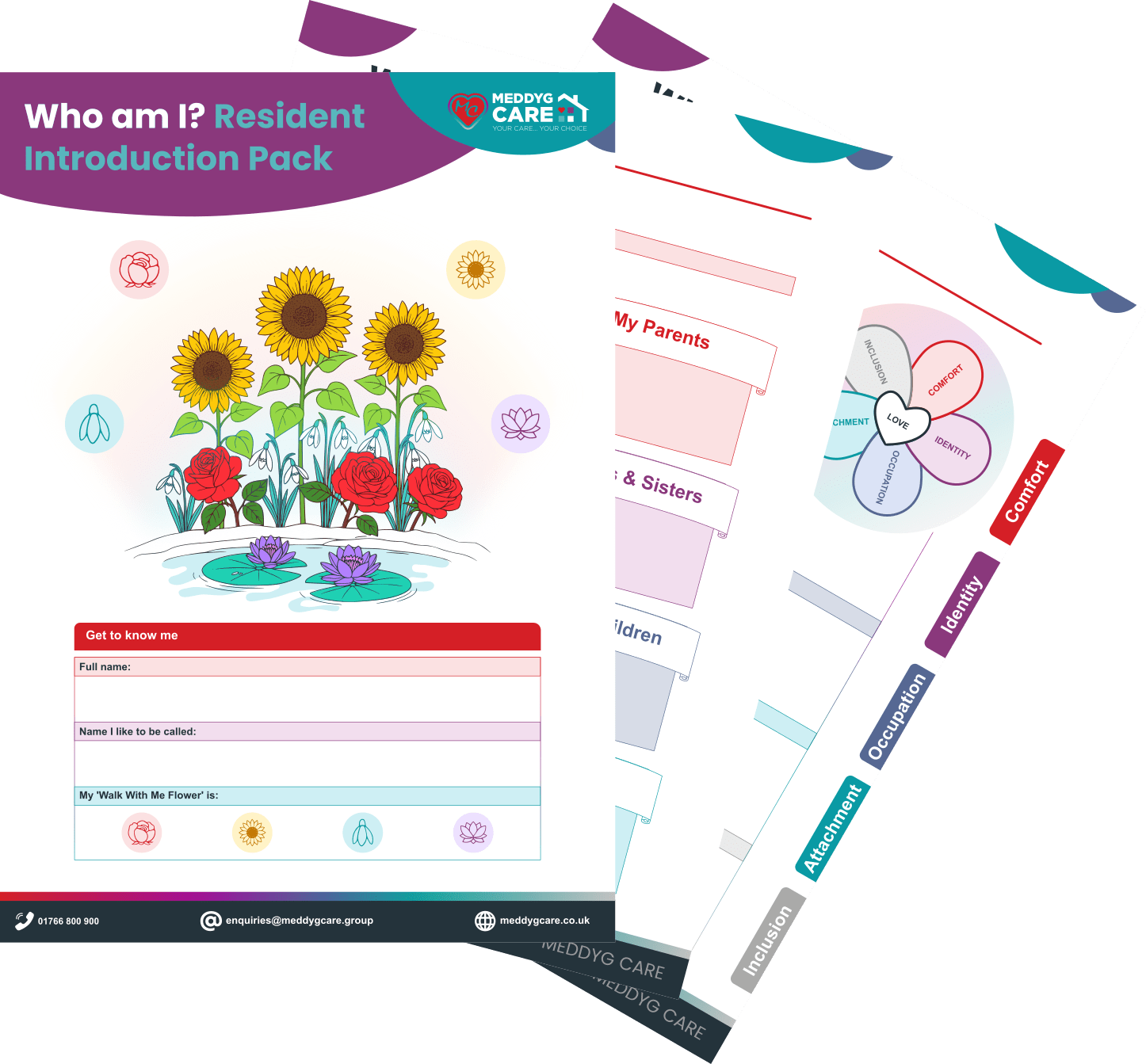
In order to develop our personalised care plans and (more importantly!) to truly begin the process of getting to know residents, we gather as much information as possible.
Likes, dislikes, routines, family, friends, capabilities, mannerisms and so much more; building a clearer picture of the person they are and to see how we can best support people with dementia to live well.
Our approach is built on the nine foundations of person-centred care created by leading professionals and the world-class dementia care coaching of NaDCAS, who awarded us the Gold 2 Star rating for our implementation and understanding of dementia care.